

Area Scanning Detectors
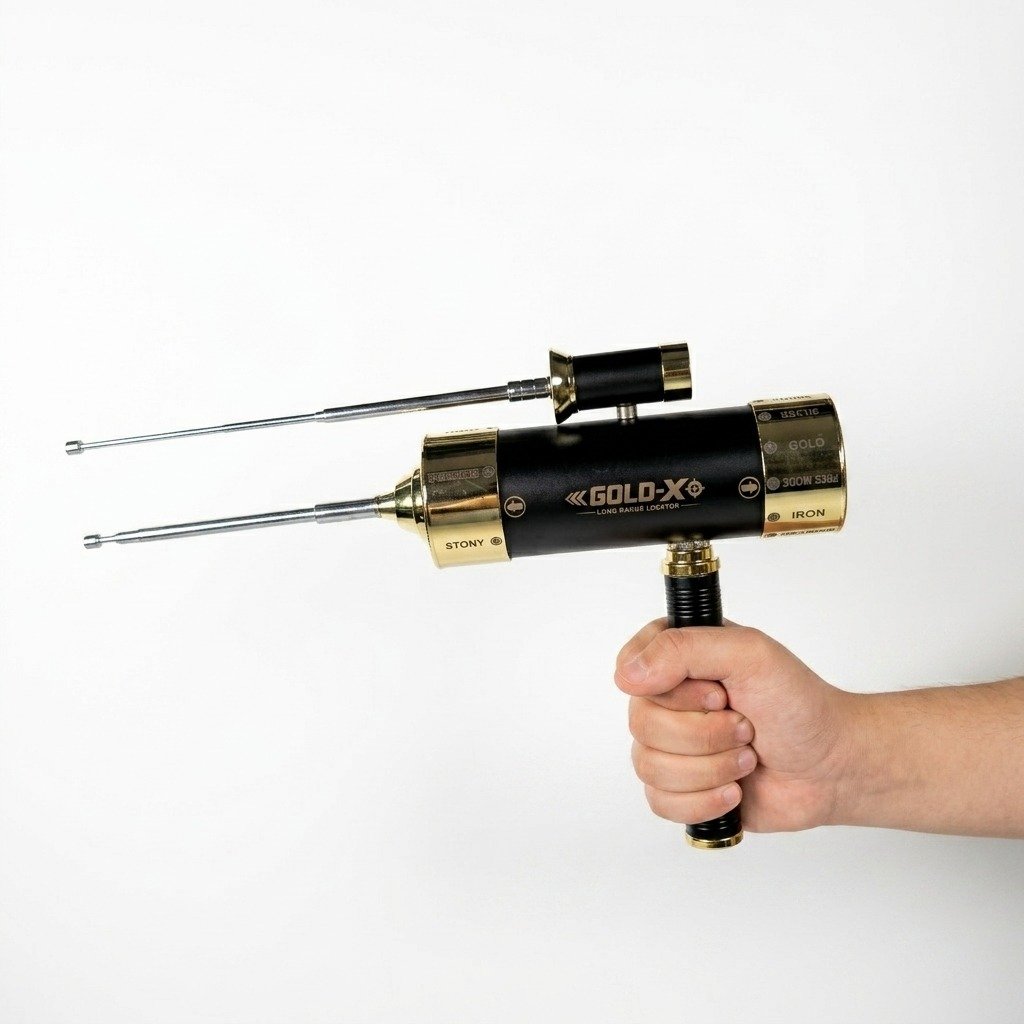
Gold-X Area Scanning System

Apron Touch Plus Area Scanning

Treasure Navigator Sysloc Area Scan

Apron Touch Area Scanning

Goldside Field Scanning

Magnetar 9000 Gold Detector

Treasure Navigator Nova

Model 16 (Piri Reis) Field Scanning Device

Apron Deluxe Area Scanning Device

Ajax Primero

Spartan Lrl Area Scan

Spartan Deluxe Area Scan

Magnetek Field Scanning

Gold Dedectors L-ROD Field Scan Rod

Gold Detectors Quatroforce Field Scanning

Gold Detectors Accumaster Pro Digital Field Scanning

Gold Dedektors RayFinder Field Scanning

Gold Shine Field Scanning

Gold Detectors Eliminator

Conrad Lrl Field Scan

Ger - Diamond Hunter

Ger - Gold Hunter

Titan Ger Gold Hunter Device Field Scanning

Titan Ger 400 Smart Area Scanning

PQWT PQWT-S500 Water Detector

MWF - MF 1200

MWF - MF 1100 Pro Standard Package

MWF - MF 1100 Pro Super Package

MWF MF1100 PRO PROFESSIONAL PACK

MWF Vigor

MWF Spark (Gold Nugget)

MWF MF 1500 Smart

MWF WF 303GH

MWF Gold Radar

MWF Gold Line

MWF GF500

MWF Aqua Water Detector

Mineoro FG90

MEGA Cobra GX 8000

Mega Scan Pro

MEGA Gold

Mega G3

Cobra GX-8000 Plus

Gold Vision Underground Imaging and Area Scanning System

Gold Legend Area Scan

Viper Field Scanning Device

Gold Star 3D Multiple Detection System

Infinity Max Pro Multi System Detector
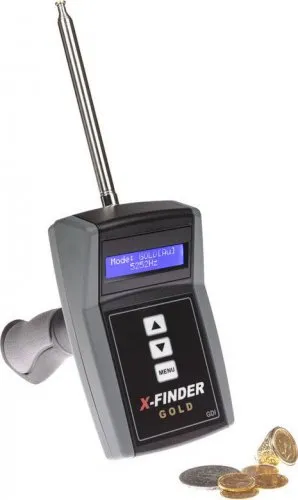
GD Gold X-Finder
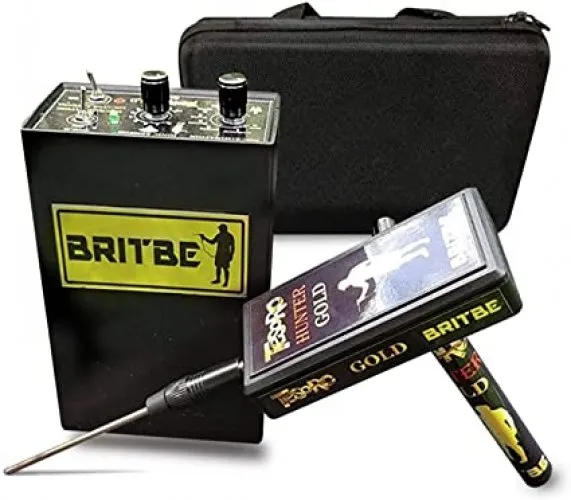
GDI Rayfinder

Britbe Tesoro Gold

Britbe Tesoro Gold Plus

Britbe Tesoro Gold Max

Britbe Tesoro LX3 PRO

Britbe Tesoro Hunter

Britbe G3 Pro

Br 20G

Br 50GS

Br 500w
Br 100T

BR Gold Step

Biotara

Ajax Alpha

Ajax Electra

Ajax Iota

Treasure Finding Rods Company TFR-4

Treasure Navigator Long Range Logator

Treasure Navigator Ruby

Treasure Navigator Nova Premium

Ajax Gamma

Apron Range Area Scanning

Ajax Omega
Area scanning systems and their intended uses
Area scanning products are offered for investigating a wider search area or obtaining directional indications associated with a proposed target. Mena Dedektör lists systems from Apron, Conrad, Gold Dedectors and other brands, alongside search rods. Sharing a category does not mean that these products use an identical physical method or produce equivalent evidence. The starting point for a purchasing decision should be what the instrument measures and how that measurement can be checked, rather than the largest range figure in a brochure.
Intended use must be distinguished from demonstrated capability. Target names, selectable metal programmes and a moving directional element do not independently establish reliable remote identification of a material. Useful comparisons examine the operating manual, stated measurement principle, access to recorded data and conditions under which claims have been evaluated. This allows expectations to be based on documentation instead of promotional imagery alone. Where supporting information is unavailable, the resulting uncertainty should remain explicit.
Search rods and electronic area scanning devices
With a product such as the Gold Dedectors L-ROD search rod, visible movement should not be equated with a recorded sensor measurement. Movement does not establish its own cause or identify a buried material. An assessment must address influences such as the user's handling, movement and expectations. The availability of a rod or long-range system for sale does not independently validate its claimed detection performance.
An electronic unit, antenna or screen also requires explanation. When reviewing a model such as the Conrad LRL, ask whether a displayed value represents a measured signal or a programme selected by the user. Terms such as frequency, ions or resonance are not substitutes for a documented measurement chain. The sensor response, units, environmental controls and repeatability should be understandable. A feature that cannot be explained or checked should not acquire credibility simply because it has a technical name.
Area scanner range, depth and gold detection claims
Range, depth and material discrimination describe different proposed capabilities. Indicating a direction across the surface is not the same as measuring how deeply an object is buried. Entering an area size on a screen does not demonstrate that the selected area has been surveyed. Ask whether quoted figures specify the target's dimensions, material, position, surrounding conditions and assessment procedure. Without those conditions, a number cannot reasonably be transferred to a different site.
A selectable gold mode raises a separate question: how was discrimination from other materials evaluated? Following the known position of one sample is a weaker demonstration than distinguishing unknown targets from alternatives and empty locations. Successful clips selected from a longer series do not reveal the overall error rate. Likewise, a demonstration by an experienced operator does not establish that another user will obtain repeatable results under comparable conditions. The record needs to include misses, incorrect selections and uncertain responses.
How to compare area scanning models
When comparing Apron area scanning options with other product families, gather the following information in one document. The purpose is to distinguish documented properties from claims still requiring evaluation, rather than to award unsupported scores to brands. It also helps prevent accessories or display appearance from dominating a decision that depends primarily on the quality of the underlying evidence.
| Comparison topic | Explanation to request | Insufficient indicator | Decision value |
|---|---|---|---|
| Operating principle | Measured quantity and sensor | Technical terminology alone | Understanding the proposed method |
| Material selection | Blind, controlled comparisons | A metal name in a menu | Testing the discrimination claim |
| Range and depth | Target and environmental conditions | An unconditional headline figure | Setting realistic expectations |
| Repeatability | Records of all trials | Selected successful footage | Assessing consistency |
Read certificates according to their actual scope. A document addressing electrical safety or electromagnetic compatibility does not automatically validate target detection performance. The issuing organisation, tested model and assessed property should be clear. A certification logo should not be converted into a depth or discrimination guarantee when the underlying assessment did not test that claim.
How to assess an area scanner demonstration
If a demonstration is arranged, the search operator should not know the target location beforehand. Separate target placement from searching, and avoid visible clues or comments that could guide the result. Agree in advance on the number of trials, the definition of success and the role of empty control locations. A broad directional indication is not equivalent to correctly identifying a predefined small area. Changing the success criterion after a result has been observed weakens the comparison.
Record every outcome, including uncertainty and incorrect responses. Consider whether the observed results can be distinguished from chance rather than counting only apparent successes. A short retail demonstration does not replace rigorous independent validation, but it can show whether claims are expressed in a testable form. If controls are rejected or failures are explained only by the operator's beliefs, that limitation belongs in the purchasing assessment. Repeating a procedure is useful only when its conditions and scoring remain sufficiently clear.
Area scanning and underground imaging: different sources of evidence
A directional indication alone should not support an expensive excavation or a claim that a particular object has been found. Where a project requires physical measurements and recorded survey data, appropriate geophysical methods may need separate consideration. The underground imaging category contains other equipment types, but each must still be evaluated by its actual technology. A coloured display does not eliminate uncertainty, and agreement between two devices is meaningful only when their methods and possible shared errors are understood.
Before ordering, compare the main unit, antennas, carrying components, software and power accessories in writing. Clarify licence terms, update arrangements, training scope and service procedures without assuming they are included free of charge. A listed model does not establish current stock or a delivery date. Allow for evaluation, learning and any independent verification needed by the project. If the supporting evidence does not meet the required standard, delaying the purchase or choosing a different measurement approach remains a reasonable outcome.
Review Mena Dedektör's area scanning products through their documented features and package contents, keeping performance expectations within the limits of the available evidence.
Area scanner prices: what affects the cost?
Area scanner prices should be compared against a clearly defined package. A search rod, an electronic control unit and a set containing several components are different purchases. Ask for the exact model, included antennas or rods, power accessories, carrying equipment and any software to be listed separately. Similar product names do not necessarily identify equivalent bundles. Checking the model code alongside the contents makes it easier to see what an additional charge actually buys. A larger collection of accessories does not establish stronger evidence for detection performance.
Electronics, displays, mechanical construction, licences and the scope of support can affect an offer. Nevertheless, a higher price is not evidence that a measurement claim is valid. For each extra cost, identify the documented function it provides. If software is part of a package, establish whether it supports recording, export or updates, and whether those functions apply to the supplied version. Additional target names in a menu do not demonstrate better material discrimination. Keep commercial value and evidence for performance as separate parts of the comparison.
Use the product cards above to review current model listings and package descriptions. For a quotation, clarify the currency, taxes, delivery terms, training and any additional licence costs. A listing does not confirm immediate availability or show that every pictured accessory is included. Compare offers prepared for the same scope and at a comparable date. Unspecified services should not be treated as free inclusions. A technical claim that lacks supporting evidence remains uncertain regardless of the amount allocated to the purchase.
Which area scanning devices are best for your needs?
A defensible answer starts with the intended output rather than an unsupported brand ranking. Directional guidance, recorded physical measurements, location estimates and material identification are different requirements. For each candidate, ask how the proposed method supports the required output and what evidence is available. Choosing the most expensive device or the largest advertised range does not answer that question. Clear operating principles and testable claims are more useful selection criteria than a general description such as advanced or professional.
When assessing Apron, Conrad or Gold Dedectors options, compare individual products rather than assuming that a brand name validates every model. Different versions may include different hardware and documentation. Request the relevant manual, a written contents list and the conditions proposed for a demonstration. Record points that remain unexplained and resolve them before placing an order. The aim is to establish what information the system can actually provide for your investigation, rather than which model receives the most enthusiastic promotion.
User reviews can still help with specific practical questions. Comments about handling, menu clarity or delivery experience concern aspects a purchaser can observe. They do not independently validate remote metal identification. Satisfaction with a purchase and a successful controlled evaluation are different kinds of evidence. If the required performance has not been demonstrated adequately, there may be no justified best option within the shortlist. Investigating another measurement method, or postponing a purchase, can be a reasonable response to that uncertainty.
Choosing an area scanner model and checking its package
Prepare a short comparison record for each candidate. Include the exact model, the manufacturer's stated operating principle and the components to be supplied. Add data recording, user training, power requirements and service arrangements where relevant. Distinguish written specifications from verbal descriptions. In particular, check whether every item in a product photograph appears in the quoted contents. An illustration may show a configuration broader than the package being offered, so the written list should determine the commercial comparison.
Usability deserves its own assessment. During a demonstration, observe how the equipment is carried, assembled and operated in the lighting and clothing expected on site. These observations assess handling; they do not validate detection claims. For powered equipment, review charging compatibility, care instructions and storage recommendations. Do not assume a particular operating time or resistance to water unless the manufacturer documents it for the relevant component. Practical limitations can affect the suitability of an otherwise convenient package.
Before deciding, bring the intended use, unresolved technical questions and quotation scope together in one record. Define where the product would fit into the investigation and where independent measurements would still be needed. This also helps avoid buying accessories without a clear purpose. Browse Mena Dedektör's area scanning listings within that framework and request missing information for the specific models being considered. A useful package has an understood scope and evidence-based expectations; its value is not determined simply by the number of parts in the case.
Frequently Asked Questions (FAQ)
Does a search rod turning prove that metal is present?
No. Movement does not identify its own cause. Controlled evaluation is needed to address user influence and other variables before attributing it to a specific target.
Is a gold programme enough to establish material identification?
No. A programme label is not validation. Assessment needs alternative targets, empty controls and complete reporting of the results.
Does the range setting show the area actually surveyed?
A selected value and a verified measurement footprint are different things. Documentation should explain what the setting changes and how its effect has been assessed.
Does a certificate validate detection success?
Only if that performance falls within the certificate's actual assessment. Safety or compatibility testing does not by itself establish target finding capability.
Why check an indication with another method?
An independent method suited to the target may help test an interpretation. Matching indications are not conclusive unless the methods and their error sources are understood.